Commodity Trading Explained: Types, Advantages & Strategies
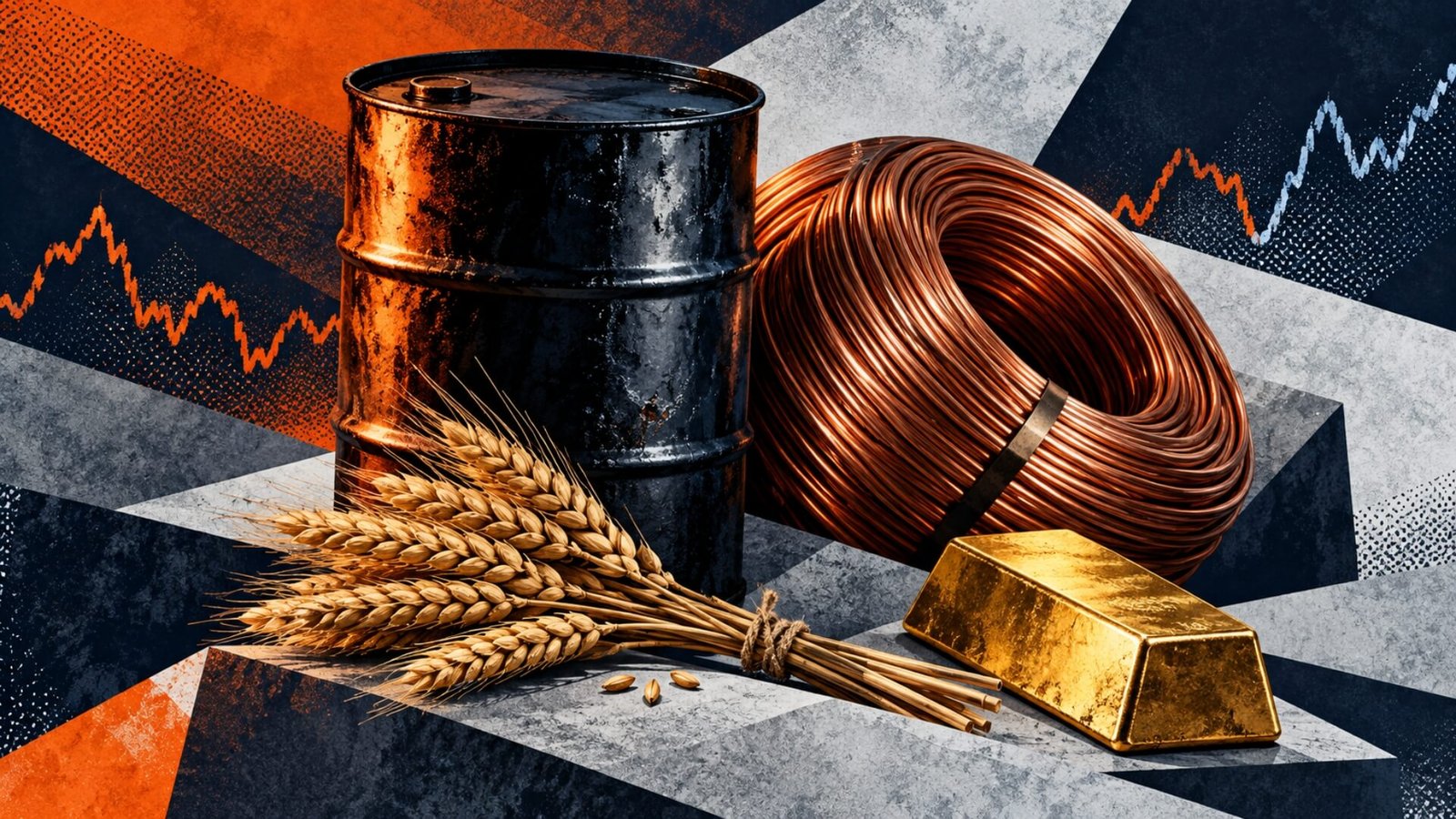
Commodity Trading refers to the buying and selling of commodities such as gold, silver, crude oil, natural gas, agricultural products and industrial metals with the aim of profiting from the price movements.
Unlike the stock market, where investors buy and sell shares of companies, commodity trading usually involves tangible goods or contracts related to the goods.
Commodity Market Trading plays an important role in the global economy as they are used in agriculture, manufacturing, transport, energy and construction industries.
The prices of commodities are determined by demand and supply, inflation rates, political developments, weather conditions, exchange rates and overall economic performance.
Those who are interested to invest in commodities should understand commodity trading basics first.
Commodity Trading: What is it?
What is commodity trading? Well, simply put, it is a buying and selling of commodities and commodity derivatives in a formalized manner.
Commodities usually include agricultural products, metals such as gold, silver and copper, crude oil, natural gas, and other resources.
In India, commodity trading happens on the commodity exchanges.
Most often, commodity trading in India happens in the form of futures and options on the commodity instead of actual delivery of the good.
So, instead of buying gold, an investor can buy a future contract on gold, which would depend on the movement of the price of gold.
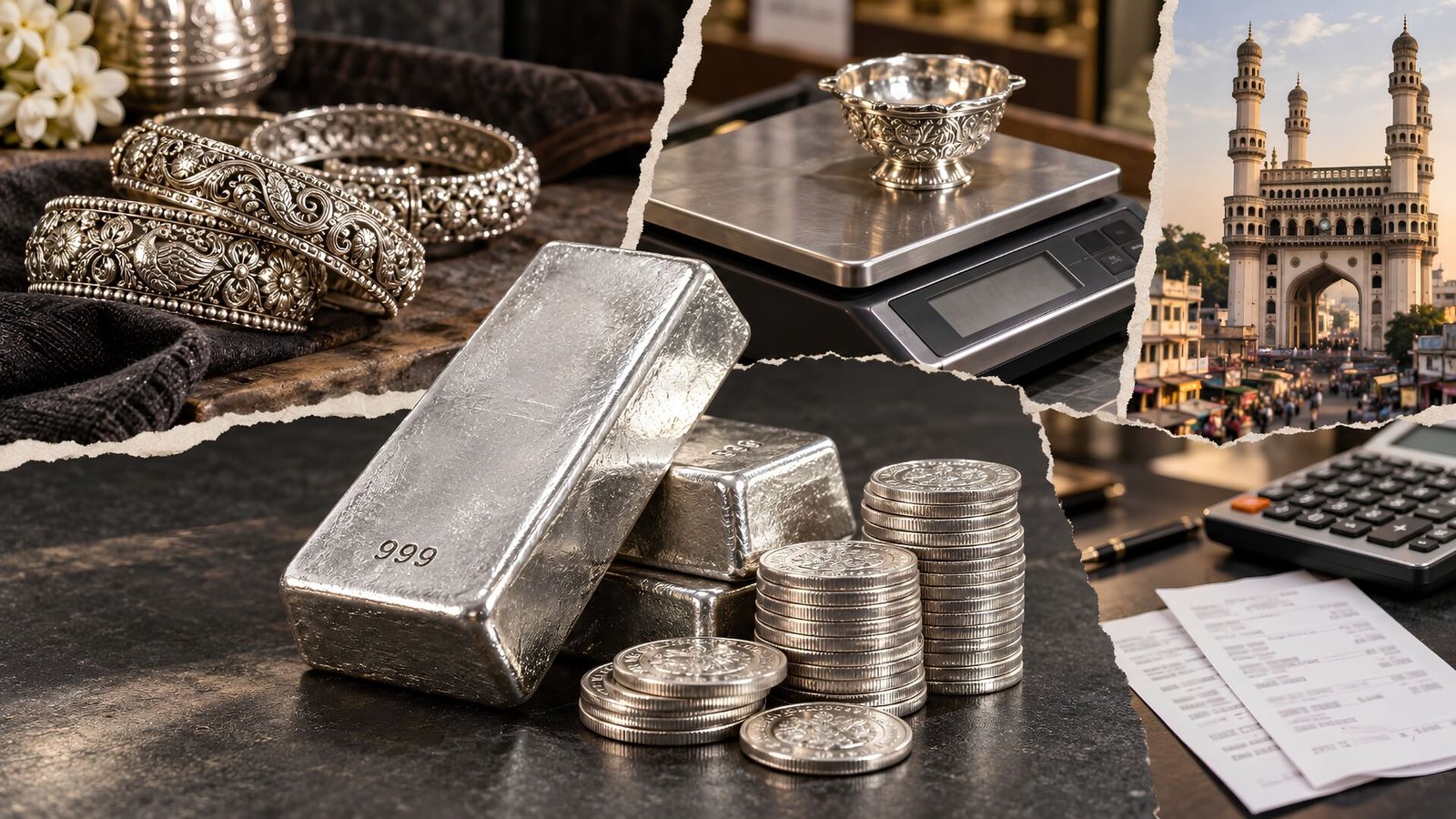
For physical gold purchases, city-wise gold rates on Rupix provide a reference; confirm purity, premiums and the seller’s final quotation separately.
How does commodity trading work?
Commodity trading usually takes place through standardized contracts on the commodity exchanges.
These contracts have specifications on quality, quantity, delivery term and other aspects.
So, if a trader expects the price of crude oil to rise, he buys a future contract on crude oil.
If the market price of crude oil future moves up, as he expected, he profits; however, if the future price moves down, he sustains a loss.
The same applies to the situation when a trader expects the future price to move down.
Trading of futures happens on a leverage basis with only a percentage of the contract value as margin.
Commodity Investment: Different ways to invest in commodities
There are several ways to invest in commodities.
Physical commodities: Buying physical commodities such as gold and silver is an option.
However, such investments need to consider storage, insurance and other costs.
Commodity futures: Futures contracts allow investors to buy/sell commodities at a predetermined future price.
Commodity options: Options offer more flexibility to investors compared to futures.
Exchange Traded Commodity (ETC) funds: Another way to invest in commodities is through commodity ETFs.
Types of commodity markets
There are two broad types of commodity markets.
The Spot market: This is a market for buying and selling commodities for delivery at a near date.
The prices in this market are called spot prices.
The Derivative market: The derivative market allows for futures and options trading on the commodities.
Unlike spot market, it does not involve delivery of the commodity immediately upon closing the trade.
Rather, it involves contracts on the commodity, which specify the delivery date of the commodity.
Trading on the commodity markets in the form of futures and options is common among speculators and hedgers.
Benefits of Commodity Trading
The first benefit of commodity trading is diversification.
Commodities tend to behave independently of stocks and bonds; therefore, adding commodities to a portfolio can help reduce the overall risk.
Secondly, commodities help add exposure to certain macro trends, which can help investors profit from them.
For instance, energy commodities are often impacted by international supply-demand dynamics, while gold is impacted by inflation, interest rates, and macroeconomic environment.
Lastly, commodity derivatives enable hedging against adverse price movements of the commodities.
For instance, companies can hedge against price movements of commodities, which they use as inputs.
Thirdly, a wide variety of commodities helps in trading different sectors such as precious metals, energy, base metals and agricultural commodities.
Risks and Challenges of Commodity Trading
Commodity trading carries a number of risks and challenges, which should be evaluated by potential investors.
Price fluctuations: The prices of commodities can be highly volatile due to supply-demand dynamics, geopolitical developments, and weather conditions.
Leverage risk: Due to the leverage involved in trading commodity futures, even small price movements can result in substantial profits or losses.
Read SEBI’s commodity derivatives FAQs for an explanation of market participants, contracts and risks.
International price exposure: Some commodities are priced in foreign currencies, and therefore, expose investors to exchange rate risk.
Liquidity risk: Some commodities and derivative contracts are less liquid than others, which can impact trading volumes and ease of exit.
Knowledge risk: Trading commodities involves understanding the contract specifics such as margin requirements and volatility.
Therefore, a trader should understand commodities to mitigate risks.
Potential investors should consider the risks before getting involved in commodity trading.
Trading Commodities in India: What can be traded?
Indian commodity exchanges offer trading across a wide range of commodities.
The list can vary depending on availability.
However, most often, the following commodities are available for trading:
Precious metals: Gold and silver
Energy: Crude oil and natural gas
Base metals: Copper, aluminium, zinc, lead, nickel etc.
Agricultural commodities: Agricultural commodities and derivatives
Before trading, it is important for traders to check if their desired commodity is available for trading.
You can explore commodity futures data on Rupix for market information. Confirm active contracts and specifications with the exchange before trading.
Who participates in commodity markets?
There are several participants in the commodity markets.
Hedgers: Hedgers use commodity futures to hedge against price fluctuations of commodities they produce or use.
For instance, a trader who imports crude oil can hedge against price fluctuations of crude oil.
Speculators: Unlike hedgers, speculators do not have an underlying interest in commodities.
However, they seek to profit from the price changes of commodities.
Speculators take positions in commodities, which they believe would rise or fall in price.
They look for arbitrage opportunities between similar commodities.
Institutional and professional investors: Institutional investors and professional traders also take positions in commodities for diversification of their portfolios or other purposes.
These are just some of the common participants in the commodity markets.
However, there are many others, who take part in different markets.
How to get started with commodity trading?
To start commodity trading in India, an investor needs to open a commodity trading account with a broker, who would provide him/her access to commodity derivative contracts.
After completing the mandatory procedures regarding the account opening, a trader can select the commodities and contracts they wish to trade.
Before placing any order, it is important to understand the contract size, margin requirements, expiry date, and cost of the contract.
MCX’s official FAQs provide information on commodity derivatives and options. Check the specification and latest circulars for the particular contract you intend to trade.
Next, the trader should learn about the commodity, which underlies the contract, and factors, which affect its price.
For instance, gold is affected by interest rates, forex rates, inflation and geopolitical factors, while crude oil is affected by supply-demand dynamics.
Finally, a trader needs to come up with a risk management strategy.
Commodity Trading Hours in India: When to Trade Commodities?
Commodity Trading Time can vary for different exchanges, commodities, and contracts.
In addition, some commodities have extended trading hours due to their international exposure.
Therefore, rather than relying on an article, which might be several years old, it is a good idea for a trader to check commodity trading time on an exchange website or with his broker before placing any order.
Trading hours can vary due to various factors including holidays, regulatory changes, and others.
Common commodity trading strategies
There is no one-size-fits-all commodity trading strategy, as different strategies can be applied across different commodities, markets, and timeframes.
However, some of the most common commodity trading strategies are as follows.
Trend trading: Trend trading involves identifying the prevailing trend and riding it.
Breakout trading: Breakout trading involves buying or selling commodities, which move beyond a key level and then riding the momentum.
Range trading: Range trading is suitable for sideways markets.
It involves buying near the support level and selling near the resistance level.
Fundamental trading: Fundamental trading involves analyzing supply-demand dynamics of a commodity, its inventory, inflation, interest rates, weather and other factors to predict future price movements.
Hedging: Companies hedge their commodity exposure to limit downside risks.
However, hedging is also used by investors to offset losses in one area with gains in another.
Risk management is an integral part of any commodity trading strategy.
Conclusion
Commodity trading enables investors to get exposure to a wide range of commodities including precious metals, energy and other industrial goods.
Commodity trading can be used for both speculative and diversification purposes.
However, it is important for investors to understand commodity trading, contract specifications, commodities, commodity trading hours, commodity trading strategies, and risk management.
This would enable them to get the best out of commodity trading.
However, it is important for investors to understand the underlying asset and exchange specifics rather than focusing on prices only.
FAQs
Commodity trading refers to buying and selling of commodities such as gold, silver, crude oil, natural gas and metals through commodity markets.
Commodity market trading refers to trade in physical commodities or commodity derivatives, whose prices are dependent on the underlying commodity.
Yes, commodity trading is legal in India through legitimate channels.
Commodity derivatives can be traded through recognized exchanges and market intermediaries, as per the Indian laws.
Depending on availability, traders can trade in gold, silver, crude oil, natural gas, copper, aluminium and agricultural commodities.
The commodity trading time varies for different exchanges, commodities and contracts; therefore, it is best to check with the exchange or your broker before trading.
Yes, commodity trading can be risky.
Commodity prices can display a high degree of volatility, and futures are traded on leverage, which can magnify gains and losses.
Stock trading involves buying and selling shares in companies, whereas commodity trading involves buying and selling commodities and commodity derivatives.
Beginners can trade commodities; however, they need to understand the contract specifications, trading hours, leverage, margins, expiry and risk management before getting started with commodity trading.
There is no one-size-fits-all strategy; however, some of the common commodity trading strategies include trend trading, breakout trading, range trading, fundamental trading, and hedging.
To start commodity trading in India, an investor needs to open a commodity trading account, activate commodity trading, learn about commodity trading contracts, study the commodity, and apply a suitable risk management strategy.